Sauna - 5 benefits confirmed by research
Sauna in Palanga - a spa treat that improves health
You've probably felt that rush of well-being after a visit to the sauna, too: a lighter body, calmer thoughts, reduced stress levels and deeper sleep. Over the past decades, there has been a lot of scientific research that supports the benefits of sauna for the body - not only does a visit to the sauna have a one-off health benefit (which is only felt when you leave the sauna), but it also has a significant impact on our wellbeing in the long term.
„Palanga Visit Apartamentuose“ sukūrėme privačią SPA zoną su pirtimi ne tik dėl jaukumo ar pramogos – tikime, kad tikras poilsis yra tuomet, kai visapusiškai pasirūpinama kūnu. Ir šiandien mokslas tai patvirtina.
Public or private baths: where are the benefits of bathing greatest?
While any sauna in Palanga will give you a certain sense of relaxation, the full benefits for your body come from two important aspects: the tranquillity of the environment and hygiene. Think these are less important details? They affect how deeply the body will relax.
Quiet environment
For a sauna to work as a stress-reduction tool, the brain needs to reach a complete state of safety. In a public sauna, the bustle of strangers talking or doors slamming is a distraction.In a private space, free from the bustle of bystanders, the body is more likely to go into parasympathetic mode, which is when deep recovery happens.
Hygiene
It goes hand in hand with getting healthy. In public places, water is disinfected with chlorine, which can irritate the skin or respiratory tract. The solution that is considered to be the highest standard is to change the water regularly without chemical additives. This allows you to enjoy cleanliness and naturalness, which is essential for wellness.
Private SPA in Palanga
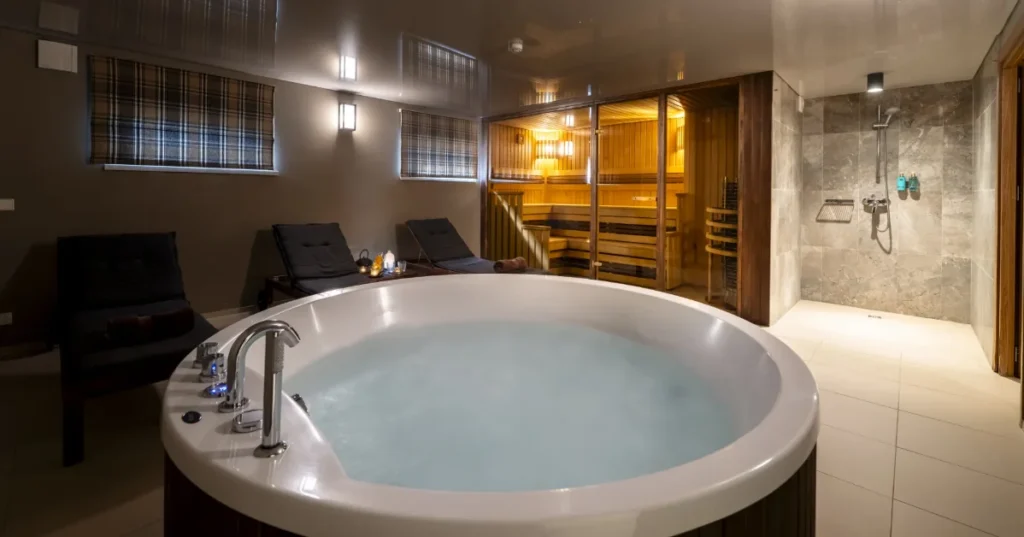
If you are looking for a place where these principles of wellness become a reality, we invite you to the Palanga Visit Apartments SPA:
- Complete privacy - time reserved just for you, no intruders, quiet environment.
- Maximum hygiene: the water in the jacuzzi is changed after each client.
- Healthy environment: we don't use chlorine, so you'll avoid skin and respiratory irritation. Our spa in Palanga is also particularly popular with families with children, as the water is suitable for children.
Five benefits of bathing that have been confirmed by research
1. Better heart function
Pirtyje Jūsų širdis pradeda plakti greičiau — panašiai kaip lengvo pasivaikščiojimo metu. Kraujagyslės išsiplečia, kraujas cirkuliuoja laisviau. Lankantis pirtyje reguliariai, širdis ir kraujagyslės „treniruojamos“ – tai gerina kraujagyslių elastingumą ir mažina kraujo spaudimą. Tad apsilankymas pirtyje yra kaip švelni, ne per intensyvi treniruotė.
2. Lowers blood pressure
The heat of the sauna causes blood vessels to dilate. This acts as a natural regulator of blood pressure. Studies have confirmed that passive body warming increases the production of nitric oxide—a molecule that naturally dilates blood vessels and lowers blood pressure. Simply put: the sauna helps blood flow more freely and makes it easier for the heart to work.
3. Slows ageing
When the body heats up, it triggers a kind of defence mechanism - it produces special proteins that help cells regenerate. These proteins essentially improve the heart's ability to withstand stress and prevent cell ageing. It's like a kind of body repair procedure that happens every time you visit a sauna.
4. Reduces stress
It's not just relaxation that makes people feel calmer after a sauna. The heat stimulates the release of brain chemicals responsible for a better mood and less stress. Research shows that regular sauna use can reduce systemic inflammation in the body - one of the main causes of chronic stress and fatigue. The result is that it is easier to fall asleep at night and get up in the morning.
5. Deeper sleep
This is one of the most frequently mentioned changes among people who regularly visit the sauna. After a sauna, the body temperature gradually drops - and it is this drop that signals to the brain that it is time to sleep. Sleep after a sauna is deeper and more restorative than usual.
What does science say about the benefits of sauna?
Per pastaruosius 20 metų buvo atlikta iš tiesų daug tyrimų šiuo klausimu – daugiausia mokslinių tyrimų atliko suomiai. Jie stebėjo tūkstančius žmonių — kokios sveikatos, įpročių, amžiaus žmonės lankosi pirtyse, kaip dažnai tai daro ir kokia jų sveikata ilguoju laikotarpiu. Rezultatai įdomūs ir stebinantys – kelis dešimtmečius trunkantys tyrimai leido pastebėti, kad pirties nauda ne „vienkartinė“.
Long-term studies have shown that people who visit the sauna more frequently were statistically less likely to suffer from heart disease and lived longer—even if they had unhealthy habits or other factors affecting their health (such as being overweight, smoking, or low physical activity). These findings were summarized by researchers Jari Laukkanen and Setor Kunutsor from the University of Eastern Finland In the 2024 issue Temperature in the published review.
Studies also showed a clear trend: the more often people visited the sauna, the better their health indicators were—but only up to a certain point. In Finland, men who went to the sauna 4–7 times a week were less likely to suffer from heart disease than those who went once a week; visits more frequent than daily were not studied. Why? One theory is that the body learns. Each sauna session is like a workout—the heart, blood vessels, and cellular renewal mechanisms respond better, faster, and more effectively with each session. Just as regular walking provides more benefits than a one-time walk, so too does regular sauna use offer greater benefits.
How often should I visit the sauna?
Studies link, that the greatest health benefits with the least risk to health are achieved by visiting a sauna 4 times a week for at least 20 minutes at 80 °C. Of course, even less frequent visits have health benefits: better blood circulation and sleep quality, boosted immunity, reduced stress, better skin condition.
Important: This information is general in nature and is not a substitute for a doctor’s consultation. People with health conditions or pregnant women should consult a doctor before visiting a sauna.
Sauna in Palanga
„Palanga Visit Apartamentuose“ sukūrėme privačią SPA zoną – tam, kad pirtyje atsipalaiduotumėte be pašalinių šurmulio, skirtumėte laiko sau ir netrukdomi take time for this wellness ritual. No queues, no rush and complete privacy - sauna in Palanga and time reserved just for you.
Frequently asked questions
How much time is recommended in a sauna?
About 20 minutes. If you want to stay longer, it’s better to go for several 15-minute sessions with breaks in between, rather than one long session. During the break, let your body cool down and drink some water. You can find more practical tips at Guide to Sauna Tips.
How often should I go to the sauna to experience the health benefits?
Long-term Finnish studies link the most frequent visits—4–7 times a week, for about 20 minutes each—with the lowest risk of heart disease. The benefits are also noticeable with less frequent visits: improved blood circulation, deeper sleep, and reduced stress.
Have the health benefits of a sauna been scientifically proven?
Yes, it is based on long-term studies, mostly conducted in Finland, where thousands of people were monitored over several decades. People who regularly visited the sauna were statistically less likely to suffer from heart disease and lived longer. It’s important to note that these are observational studies—they show an association, not a direct cause.
Who should avoid going to the sauna?
You should avoid the sauna if you have an acute illness, a fever, heart disease, or uncontrolled blood pressure. If you have a chronic illness or are taking medication, you should consult your doctor. If you feel dizzy, nauseous, or experience a strong heartbeat, leave the sauna immediately.
Is it okay to go to the sauna after drinking alcohol?
No. Alcohol, combined with heat, increases the risk of dehydration, a drop in blood pressure, and fainting. Studies conducted in Finland show that the majority of accidents in saunas are related to alcohol. It’s better to drink water—before, between sessions, and after the sauna.
Is a sauna suitable for children?
Older children can use the sauna, but only for a shorter time—about 5–10 minutes—and always with an adult. Young children’s thermoregulation is not yet fully developed, so it’s a good idea to consult your pediatrician before their first visit. Keep an eye on how they’re feeling: redness, irritability, or drowsiness are signs that it’s time to leave.
Is it okay to go to the sauna while pregnant?
During pregnancy, you should consult your doctor before going to the sauna. The general recommendation is to avoid high temperatures and prolonged exposure to heat, especially during the first trimester.
Can I use the sauna every day during my holiday?
Taip, jei gerai jaučiatės ir neturite sveikatos sutrikimų, dėl kurių pirtis nerekomenduojama. Svarbiausia — gerti pakankamai vandens ir nesiekti rekordų: trumpesnis, bet reguliarus apsilankymas naudingesnis nei vienas ilgas.
What should the temperature be in a sauna?
Studies that have identified benefits for the cardiovascular system typically use a temperature of around 80 °C. However, more important than the exact number is how you feel: if you have trouble breathing or feel dizzy, you should lower the temperature or shorten your time in the bath.
Does going to the sauna help you lose weight?
It’s not what people often think. After a sauna, your weight goes down because of sweating, but that’s just water—which you replenish by drinking—and the sauna doesn’t burn fat. Deliberately dehydrating your body to lose weight is dangerous. The real benefits of the sauna are different: improved blood circulation, reduced stress, and deeper sleep.
How does a private sauna differ from a public one?
The biggest differences are hygiene and tranquility. In public spaces, water is usually disinfected with chlorine, which can irritate the skin and respiratory tract. Our in the private spa area We do not use chlorine, and the water in the whirlpool tub is changed after each visit. It’s simply easier to relax in a peaceful environment without strangers around—this is based on our own experience and that of our guests, not on research findings. You can find a more extensive list of spa services at On the SPA in Palanga page.
Questions? Contact us!
Fill in the form. This is the quickest way to make a booking request.
Call us. We will advise and help you
+370 630 08558
Contact us at [email protected]