Kretinga Museum and Winter Garden
How to find us?
The Kretinga Museum is located at Vilniaus g. 20, Kretinga.
Free parking is available next to the museum:
Kretinga Museum opening hours
- Opening hours of the Winter Garden and the Central Palace I - VII 10.00 - 20.00
- Opening hours of the Watermill and the Farmer's House exhibitions III - VII 10.00 - 18.00
- The opening hours of the Tiškevičius Family Chapel-Mausoleum are from 1 May to 30 September: III - VII 10.00 - 17.30 (by prior registration).
Prices
- Adults - EUR 6 per ticket,
- pupils, students, pensioners - EUR 3 per ticket.
Important: no tickets are sold 30 minutes before the exhibitions close.
Other frequently asked questions:
How to buy tickets?
Tickets can be purchased at the museum box office (Vilniaus g. 37, Kretinga) and at the Palace's self-service box office (Vilniaus g. 20, Kretinga). However, on Mondays and Tuesdays, tickets are only available at the Palace's self-service box office for payment with bank cards (Vilniaus g. 20, Kretinga).
How long does it take to visit?
If you want to take your time, stop by the Winter Garden, visit the mill and take a stroll in the park, we recommend spending at least 2 hours in the park.
Do we recommend visiting with children?
The Kretinga Museum is the perfect place for a visit and leisure time with the whole family. The museum is full of activities that are interesting for both children and adults - from the colourful Winter Garden to the Water Mill, where children will be fascinated by the various working machines and tools. There are also educational programmes tailored specifically for children. There are activities for children both indoors and outdoors (in the Manor Park). The whole environment is therefore family-friendly and ideal for a rich leisure time.
Kretinga Museum
When holidaying in Palanga, it's worth taking some time for short sightseeing trips around Palanga. One of the places where you will find engaging educational activities and a relaxing stay is the Kretinga Museum, located just a few kilometres from Palanga. Did you know that Kretinga is famous for some of the oldest folk traditions, archaeology and architecture?
In the picturesque manor house you can visit the winter garden, which is green all year round, see the water mill, where the first hydroelectric power station in Lithuania operated, and stroll through the park with its unique plantations, ponds and astronomical calendar.
Winter garden
The Kretinga Museum is probably best known for its spectacular Winter Garden, which is probably the most popular and best-loved area of the museum. The garden covers an area of 693.16 square metres and is home to more than 170 different plant species and around 5,000 plants. Dense greenery, lush swaying plants, succulent corners, mulberry trees and other exotic plants mingle with the impressive architecture - the Kretinga Museum takes you to a real tropical oasis. The soothing trickle of the fountain, the gentle humidity in the air and the sunlight streaming through the glass roof create a unique atmosphere and leave a truly lasting impression.
It is also home to a family of loggerhead turtles, which attract the attention of children and adults alike. The colourful parrot Barbora, a resident of the garden, also attracts curious stares.
Kretinga Museum Central Palace
The Kretinga Museum has several different spaces and expositions. One of them is the central palace of the manor, where you can learn about the history of the manor and see archaeological and numismatic expositions. The archaeological exhibition takes you back to the end of the last Ice Age: you will see old bone and flintwork, what the Baltic jewellery looked like, and the jewellery sets of the Curonian nobility.
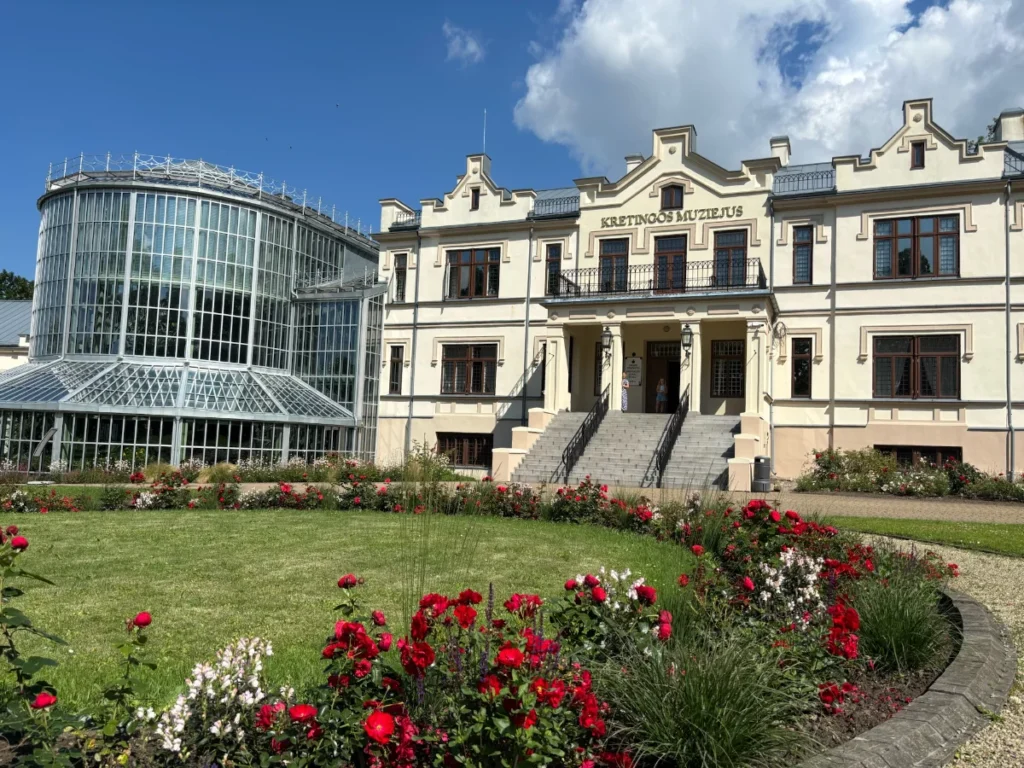
In the Manor History and Culture Exposition you will go through the entire history of the Manor House, getting acquainted with the personalities who had a significant influence on the formation and development of Kretinga Manor. You will see impressive art treasures, the original diary written by Countess Sophie and even the Count's favourite beer stein.
In the numismatic exposition, you will learn about the money market in Lithuania in the first half of the 16th century - the first half of the 18th century and the economic situation of Lithuania at that time from the treasures of coins that have been preserved and stored.
Exposition of the Water Mill
Another part of the Kretinga Museum is the water mill exposition. Here you can see authentic mill equipment, learn how the first hydroelectric power plant in Lithuania, installed by the Tiškevičius counts at the end of the 19th century, operated. The ethnographic exposition "In the Circle of the Sun" presents the old traditions of farming, flax processing, folk crafts, festivals and calendar customs - all of which are conveyed through authentic tools, household items and sculptures. The Kretinga Museum has amassed a large collection of exhibits that preserve the historical spirit and provide an insight into the life of our ancestors.
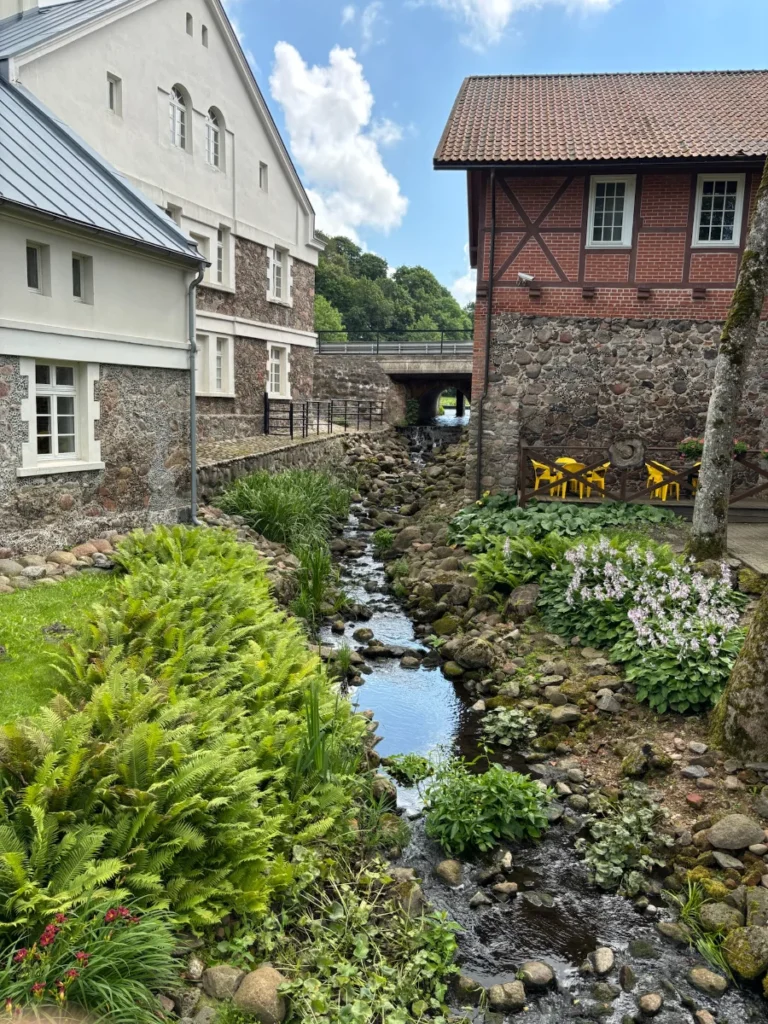
The Water Mill is also home to the Manor's sweet shop, where you can buy handmade caramel candies and the Count's exclusive chocolate, as well as sit down on the mill's terrace to drink coffee and enjoy other delicacies. The Kretinga Museum also organises tastings and educational activities.
Manor Park
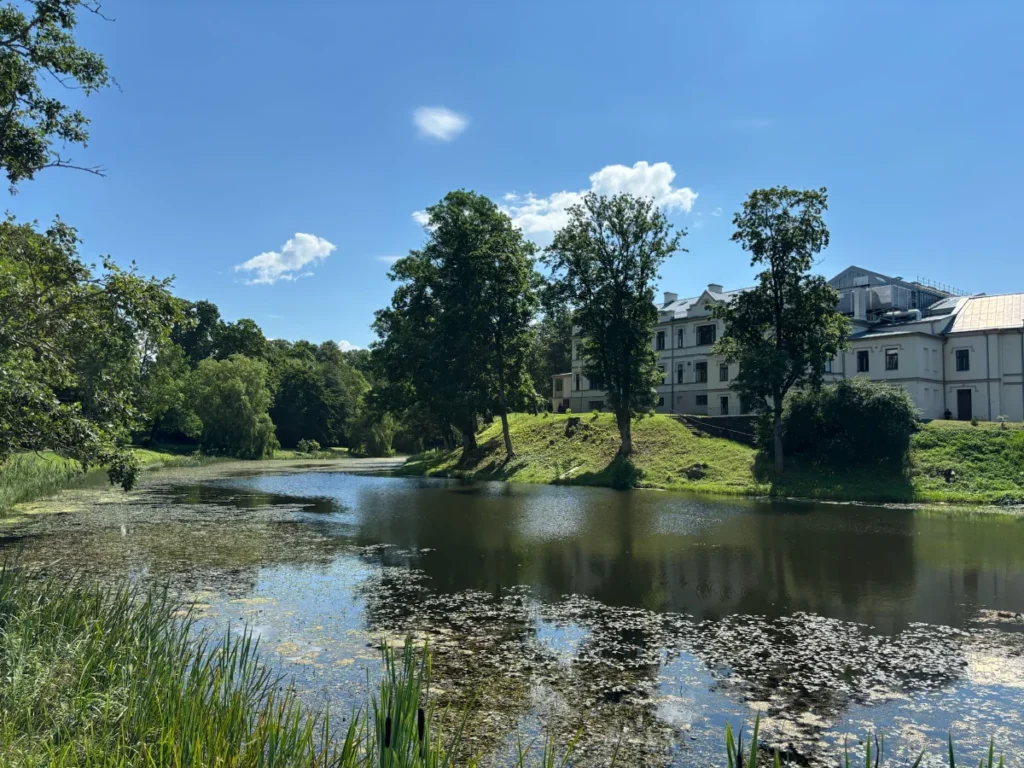
The Kretinga Museum has one more beautified space - the impressive Manor Park. The 23-hectare park has walking paths leading through avenues of old trees (oaks, lime trees, chestnuts), along the meanders of the river, and among the exceptional plants, and has resting places. A place ideal for quiet walks and family holidays. We are sure that the park's surroundings will enchant you at any time of the year - from the spectacular greenery in summer to the colourful beauty of autumn or the peace and quiet of winter. A place for both relaxation and discovery.
In the southern part of the park, you will see the Astronomical Calendar with Sundial, an interesting spatial composition with 13 momentary sculptures made of oak, stone and metal, which mark the ancient traditions of Baltic culture.
The Kretinga Museum organises various cultural and educational events in the Manor Park - excursions, concerts, and exhibitions of floristry. Visitors can hear performances of classical and brass music. Traditional Lithuanian festivals such as Užgavėnės, Rasos, Jurginės, Pentecost and Jurginės are celebrated during the educational activities.
Kretinga Museum - what else will you see?
In addition to the above-mentioned exhibitions, the Kretinga Museum also has an exhibition of the housekeeper's house, Tiškevičius Chapel - Mausoleum, the ethnographic exposition "In the Circle of the Sun", and the Kretinga Region exposition.
If you get hungry, you can eat at the on-site at the café "Pas grafas"where you can enjoy your meal surrounded by flowers and greenery. The menu ranges from lighter snack choices to the Graf's and Grafiene's signature steaks and fish dishes.
The Kretinga Museum has recently been attracting many visitors thanks to its interesting and unique events - it hosts excursions of different themes (for example, with theatre elements or tours of the exhibition of smells and history), educational events, "silent discos", concerts and many other events. If you're planning to come here, check to see if there are any exciting events happening at the same time as you. The next events at the Kretinga Museum can be found here: https://www.kretingosmuziejus.lt/lt. You can also follow upcoming events Kretinga Museum Facebook account.
We are sure that everyone who visits here will confirm that this is a place to visit, and visit more than once. The Kretinga Museum has preserved, restored and beautified so many spaces that you may run out of time during one visit. When you visit, you will really feel how well history, architecture, nature and greenery come together here.
If you still have some time left after your visit to the Kretinga Museum and want to see more, here are some recommended places to see in Kretinga: https://aplankykkretinga.lt/
Frequently asked questions
How much does a ticket to the Kretinga Museum cost?
The price of a combined ticket for the exhibitions in the Main Building, the Watermill, and the Steward’s House, as well as for the Winter Garden: adults — 8 €, schoolchildren, students, and seniors — 4 €.
On Mondays and Tuesdays, tickets are cheaper: €6 for adults and €3 for schoolchildren, students, and seniors. On these days, tickets are sold only at the museum’s self-service ticket counter, where payment is accepted by bank card (20 Vilniaus St., Kretinga). On other days, tickets can also be purchased at the museum ticket office (37 Vilniaus St., Kretinga).
For Family Card holders: €6.40 for adults, €3.20 for children. Free admission is granted to children in foster care, preschool-aged children, teachers accompanying school groups, people aged 80 and older, Lithuanian museum employees, members of the International Council of Museums (ICOM), people with disabilities and their personal assistants, as well as other accompanying persons (one accompanying person per person).
Where and how can I buy tickets to the Kretinga Museum?
Tickets can be purchased at the museum ticket office (37 Vilniaus St., Kretinga) Wednesday through Sunday and at the self-service ticket machine at the palace (20 Vilniaus St.) every day. On Mondays and Tuesdays, tickets are sold only at the self-service ticket machine, and payment must be made by credit or debit card—cash payments are not accepted on those days. Important: Tickets are no longer sold 30 minutes before the exhibitions close.
What are the opening hours of the Kretinga Museum?
The Winter Garden and the Main Palace are open daily: Mon–Sun, 10:00 a.m.–8:00 p.m.
Exhibits at the Watermill and the Steward's House — III–VII, 10:00 a.m.–6:00 p.m.
The Tiškevičiai family chapel-mausoleum is open from May 1 through September 30.
How long does a visit to the Kretinga Museum take?
If you want to take your time, stop by the Winter Garden, tour the mill, and take a walk in the park, we recommend setting aside at least 2 hours.
What is the Kretinga Winter Garden?
This is arguably the museum’s most popular space—a 693-square-meter conservatory that is home to more than 170 plant species and about 5,000 plants. Succulents, silk trees, and other exotic plants, the gurgling of the fountain, and the light streaming through the glass roof create the impression of a tropical oasis. A family of white-bellied turtles and a parakeet named Barbora also live here.
How far is the Kretinga Museum from Palanga?
The museum is located just a dozen or so kilometers from Palanga, at 20 Vilniaus St., Kretinga—it takes about 20 minutes to get there by car from Palanga. There is a parking lot next to the museum.
Is the Kretinga Museum suitable for children?
Yes. Children are fascinated by the colorful Winter Garden with its turtles and parrot, and by the working mechanisms and tools in the watermill. The museum offers educational programs tailored for children, with activities taking place both indoors and outdoors—in the 23-hectare manor park. You’ll find more ideas in the overview. Things to Do with Kids in Palanga.
Can I bring my dog to the Kretinga Museum?
Yes—you may bring dogs to the museum as long as they do not disturb other visitors. Please hold your pet in your arms during your visit.
Is there a place to eat at the Kretinga Museum?
Yes, there are actually several places to eat. The „Pas grafą“ café offers everything from light snacks to signature grilled meats and fish dishes. The manor’s candy shop, located in the watermill, sells handmade caramel candies and Grafų chocolate, and you can enjoy a cup of coffee on the mill’s terrace.
Does the museum host events and educational programs?
Yes, and there are quite a few of them: themed tours—including some with theatrical elements—educational activities, tastings, concerts, and „silent discos.“ Traditional festivals are celebrated in the manor park—Shrove Tuesday, St. George’s Day, Pentecost, and Midsummer. You can find the upcoming events at on the museum's website.
What else will you see at the Kretinga Museum Complex?
In addition to the Winter Garden, the complex features the main manor house with exhibitions on the manor’s history, archaeology, and numismatics; a watermill with equipment from Lithuania’s first hydroelectric power plant; the ethnographic exhibition „Saulės ratu“; exhibitions in the steward’s house and on the Kretinga region, and the Tiškevičiai Chapel-Mausoleum. In the southern part of the manor park stands an astronomical calendar with a sundial.
Is it worth going to Kretinga on a rainy day?
That's right—the Winter Garden and the palace exhibits are indoors, but the lush orangery is the best place to forget about the bad weather. You'll find more ideas in the reviews Things to Do in Palanga in Winter and During the Off-Season and TOP 5 places around Palanga.

Apartments in Palanga
Questions? Contact us!
Fill in the form. This is the quickest way to make a booking request.
Call us. We will advise and help you
+370 630 08558
Contact us at [email protected]